



Chill Out: Understanding the Function of Mortuary Fridges

A mortuary fridge does one critical job: hold the deceased at a steady, cold temperature to slow decomposition before identification, burial, cremation, or autopsy. Here's how these units actually work and what makes a good one.
Temperature control is everything
Mortuary fridges are built to hold a constant temperature — commonly in the 36–39°F range for standard refrigeration — because stability, not just cold, is what preserves remains. A unit that drifts or struggles to recover after the door opens isn't doing its job. Accurate thermostats, readable thermometers, and a compressor matched to the load keep the temperature where it belongs.
How the system works
Like any refrigeration, a mortuary fridge moves heat out of the interior through a compressor, condenser, and evaporator cycle. What sets a good mortuary unit apart is insulation that holds temperature efficiently, airflow designed to cool the whole cabinet evenly, and stainless construction that stands up to sanitation.
Formats
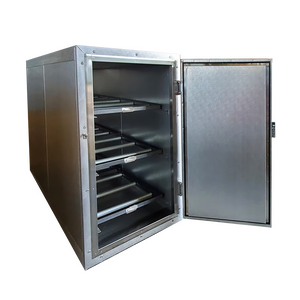
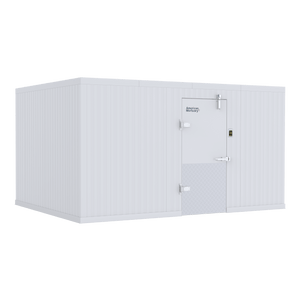
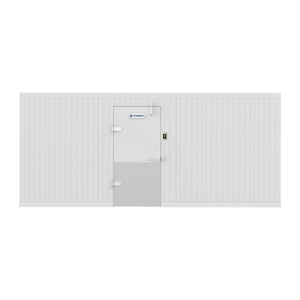
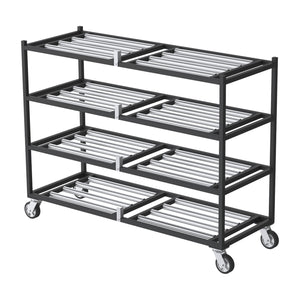
The same principles apply across formats — from compact upright units to walk-in coolers with tiered racks. For how facilities differ, see mortuary vs. morgue and our guide to morgue storage options.
Why it matters
Reliable refrigeration protects dignity, controls odor, safeguards public health, and keeps you compliant with state storage rules. It's the quiet backbone of every funeral home and morgue.
Need a mortuary fridge that holds temperature?
American Mortuary Coolers builds units engineered for steady 36–39°F performance, in upright, roll-in, and walk-in formats, shipped nationwide. Tell us your caseload.
Call 1-888-792-9315 or email [email protected]

