


Why Medical Lifts Are Essential for Safe Patient Care
A medical lift is a mechanical device designed to safely transfer patients with limited mobility between surfaces like beds, chairs, wheelchairs, and toilets. These devices reduce physical strain on caregivers while maintaining patient dignity during transfers.
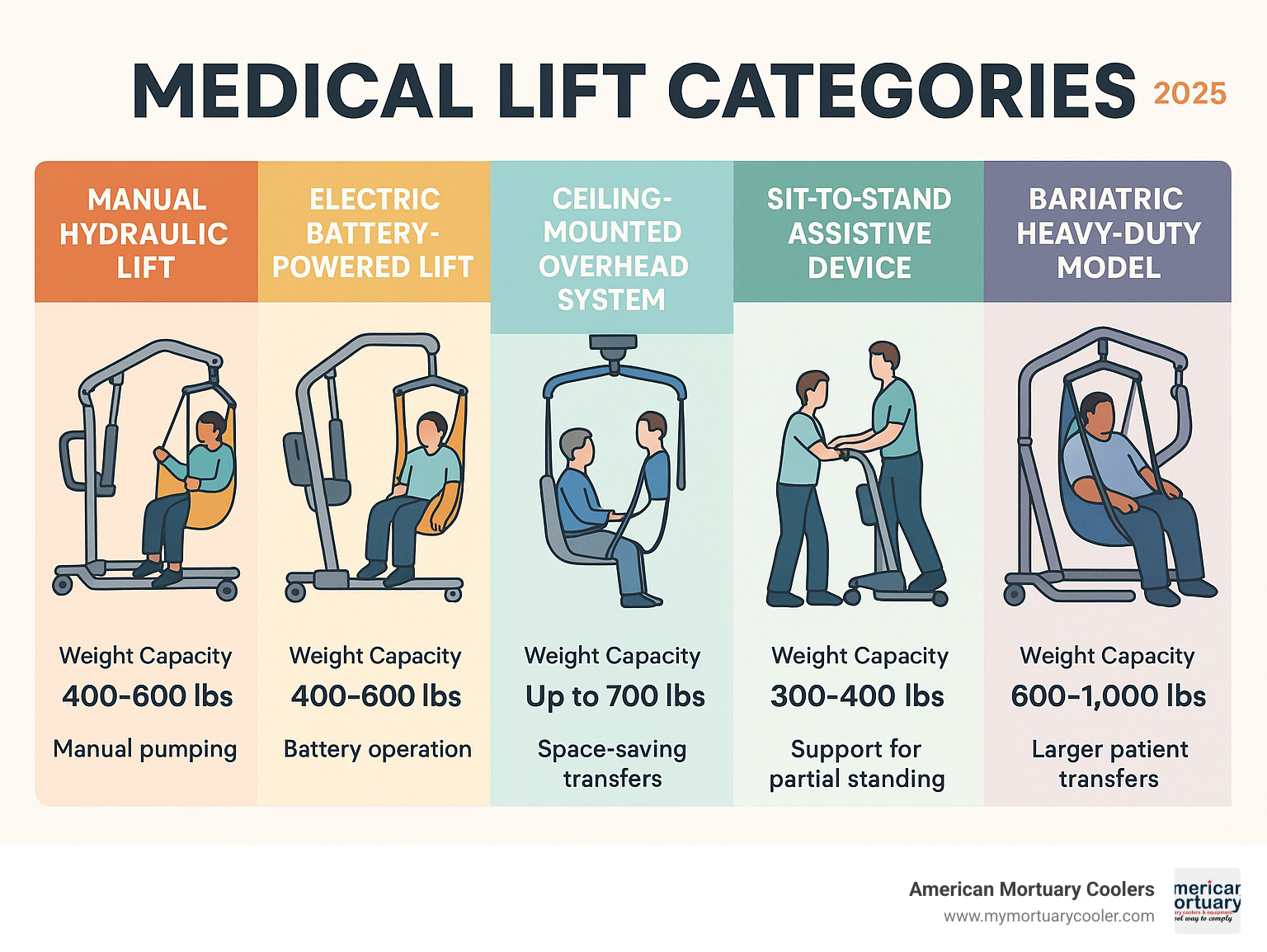
Key Medical Lift Types:
- Manual lifts - Use hydraulic pumps, cost $459-$2,815, require caregiver strength
- Electric lifts - Battery-powered operation, reduce caregiver effort significantly
- Ceiling lifts - Overhead track systems, ideal for small spaces up to 660 lbs
- Sit-to-stand lifts - Support patients who can bear 80% of their weight
- Bariatric lifts - Handle 600-700 lbs for larger patients
- Portable lifts - Fold for transport and storage
Patient handling causes more musculoskeletal injuries among healthcare workers than any other activity. Medical lifts solve this problem by providing mechanical assistance that makes transfers safer and more dignified.
Electric patient lifts are particularly valuable when frequent lifting is required, as they eliminate the physical effort needed with manual hydraulic pumps. Medicare Part B typically covers 80% of the approved amount for medically necessary patient lifts after the deductible is met.
I'm Mortuary Cooler, a national-level supplier with extensive experience helping facilities select the right medical lift equipment for their specific needs and space constraints.
Glossary for medical lift:
Understanding the Basics of Medical Lifts
When you're caring for someone with mobility challenges, every transfer can feel like a high-stakes situation. Will they fall? Will you hurt your back? These worries keep many caregivers up at night, but they don't have to.
Medical lifts have revolutionized patient care by changing dangerous manual transfers into safe, dignified experiences. Scientific research on safe patient handling consistently proves what healthcare workers have long suspected - proper lifting equipment dramatically reduces both patient falls and caregiver injuries.
The benefits extend far beyond safety. Early patient mobilization, made possible by medical lifts, actually helps people recover faster and can shorten hospital stays.
What Is a Medical Lift and Who Needs One?
Think of a medical lift as a gentle, mechanical assistant that provides stability and support during transfers. These devices aren't just for hospitals - they're lifesavers for anyone dealing with mobility challenges.
You might need a medical lift if you're experiencing mobility impairment from age-related changes, recovering from surgery, or managing chronic conditions that affect your strength and balance.
Long-term care situations particularly benefit from these devices. Whether you're caring for a family member at home or working in a care facility, medical lifts make daily transfers between beds, wheelchairs, toilets, and bathing areas much safer and more comfortable.
Core Benefits for Patients & Caregivers
The magic of medical lifts lies in how they help everyone involved in the transfer process. For patients, these devices preserve dignity during what can be vulnerable moments while reducing strain and anxiety about falling.
For caregivers, the benefits are equally impressive. The dramatic reduction in physical strain means fewer back injuries, less fatigue, and the ability to provide care without risking your own health. Many facilities report shorter length-of-stay for patients when proper lifting equipment enables more frequent, confident mobilization.
Medical Lift Types and How They Differ
Understanding the different types of medical lifts is crucial for making the right selection. Each type serves specific needs and environments, with distinct advantages and limitations.
Manual vs. Electric Medical Lift
The choice between manual and electric lifts often comes down to caregiver strength, frequency of use, and budget considerations.
Manual Lifts:
- Use hydraulic pump mechanisms operated by hand lever
- Cost-effective option ranging from $459 to $2,815
- Require greater caregiver physical effort
- No battery charging required
- Ideal when cost is a significant factor or power access is limited
Electric Lifts:
- Battery-powered or plug-in operation
- Significantly reduce caregiver strain
- Higher initial cost but lower long-term physical demands
- Recommended for frequent lifting situations
- Often include features like emergency stop and manual lowering
Ceiling, Portable & Bariatric Options
Ceiling/Overhead Lifts:
- Mounted on track systems installed in ceiling
- Ideal for small spaces and tight quarters
- Support patients up to 660 lbs (300 kg)
- Eliminate need to steer around furniture
- Require professional installation but offer superior maneuverability
Portable Lifts:
- Fold or disassemble for transport and storage
- Perfect for travel or multiple-location use
- Essential for car transfers and temporary setups
Bariatric Lifts:
- Designed for patients weighing 600-700 lbs
- Heavy-duty construction with reinforced components
- Wider base and stronger motors than standard models
Sit-to-Stand & Specialty Lifts for Partial Mobility
Sit-to-Stand Lifts:
- Support patients who can bear at least 80% of their own weight
- Excellent for gait training and lower limb strengthening
- Encourage patient participation in transfer process
- Help maintain existing muscle strength and mobility
Specialty Lifts:
- Bath/Pool Lifts: Water-safe construction for aquatic therapy
- Floor Lifts: Designed to lift patients who have fallen
- Stair Lifts: Battery-powered chairs for multi-level homes
- Vehicle Lifts: Specialized for car and van transfers
Choosing the Right Medical Lift: Key Features & Decision Checklist
Finding the perfect medical lift isn't just about picking the first one you see online. After years of helping facilities select custom equipment at American Mortuary Coolers, I've learned that the right choice depends on understanding your specific situation inside and out.
For additional insights into lift comparison methodologies, you can reference our mortuary lift comparison guide, which applies similar evaluation principles.
The most important factors to consider are patient weight capacity requirements, caregiver physical capabilities, and available space for maneuvering. You'll also want to think about how often you'll use the lift, whether you need battery power, your budget constraints, what types of slings you'll need, and how much maintenance you can realistically handle.
Weight Capacity & Bariatric Considerations
Standard medical lifts typically handle 400-450 pounds safely, while bariatric models can manage 600-700 pounds. Always choose a lift rated at least 100 pounds above the patient's actual weight to account for clothing, medical equipment, and unexpected situations.
The Viking series offers three solid options that cover most needs. The Viking M handles 450 pounds with a compact footprint perfect for tight spaces. The Viking L bumps up to 550 pounds and offers great value for larger patients. The Viking XL can handle 660 pounds and comes with a large wheelset for stability.
Safety & Comfort Features That Matter
Safety features aren't just nice-to-haves - they're absolute must-haves. Lockable casters keep the lift stable during transfers. Emergency stop buttons let you halt everything immediately if something goes wrong.
Manual lowering capability is a lifesaver during power outages. Auto weight shutoffs prevent dangerous overloading, while padded spreader bars keep patients comfortable during transfers.
Professional-grade lifts include visual and audible alarms that give you constant feedback. These undergo third-party testing and often include integrated scales for weight monitoring.
Space, Portability & Budget Factors
Home use and facility use have different requirements. At home, you need a compact footprint that can steer around furniture. Folding capability matters when you need to store the lift out of the way, and battery operation becomes crucial during power outages.
Facilities need heavy-duty construction that can handle frequent daily use. They require professional-grade safety certifications and need equipment that integrates smoothly with existing protocols.
The Golvo 9000 combines overhead lift functionality with mobile flexibility. Its parallel base-width adjustment makes it easier to lift patients in cramped spaces where traditional lifts struggle to fit.
Budget-wise, the cheapest option upfront isn't always the most economical long-term. Factor in maintenance costs, replacement parts availability, and manufacturer reliability.
Safe Use of a Medical Lift: Preparation, Operation & Maintenance
Using a medical lift safely isn't complicated, but it does require attention to detail and following the right steps every time. Most lift-related accidents happen because someone skipped a step or rushed through the process.
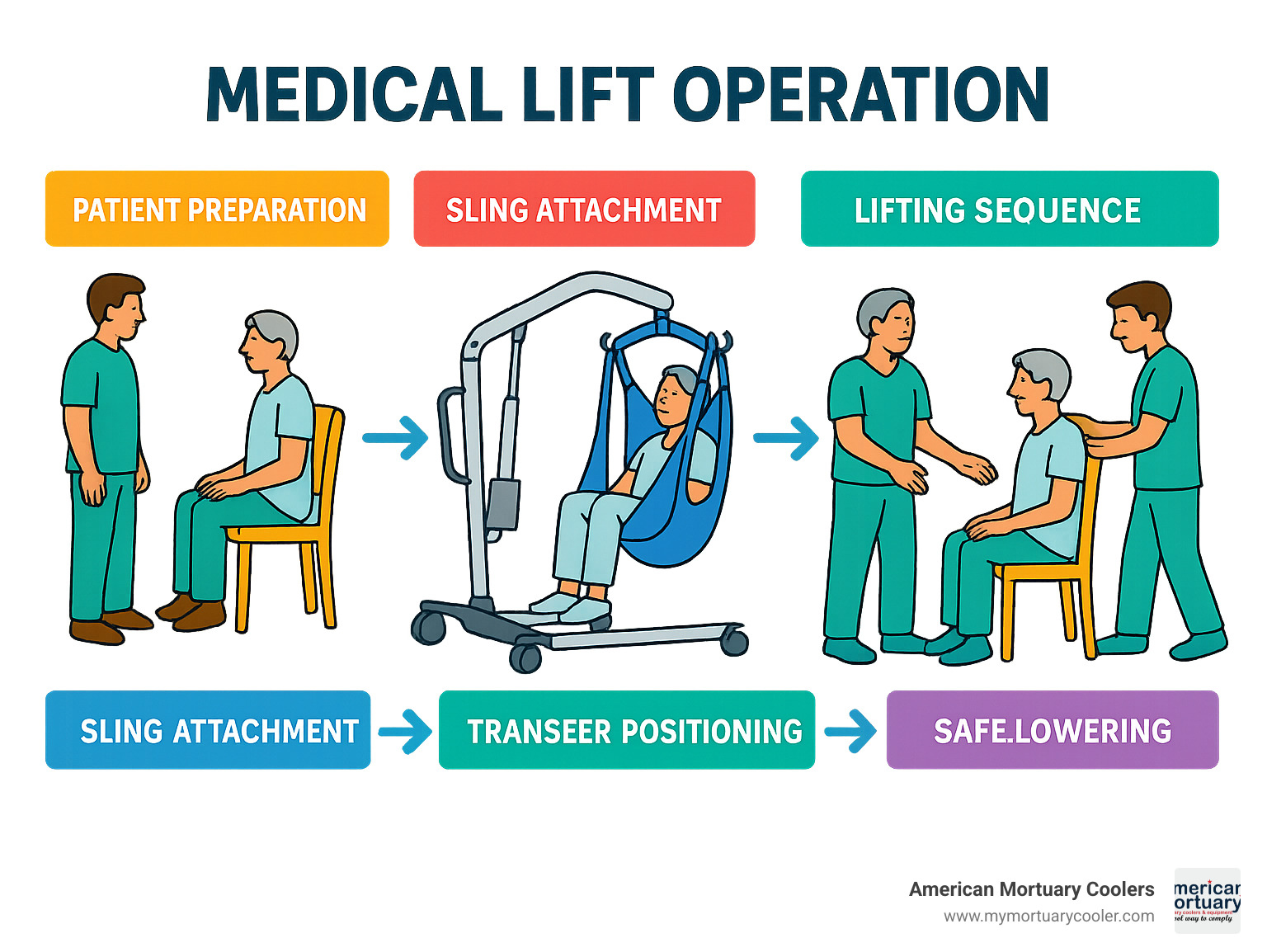
Preparing Patient & Environment
Getting ready is half the battle won. Before you even touch the lift controls, take a moment to set up your workspace properly.
Clear your pathway first. Move chairs, trash cans, and anything else that might get in your way. Make sure you have good lighting - shadows can hide important details when you're positioning the sling.
Talk to your patient about what you're planning to do. Even patients with cognitive impairments often respond better when they understand what's happening.
Check your equipment before bringing it near the patient. Battery-powered lifts should show a full charge, and you'll want to test the up-and-down motion quickly to make sure everything's working smoothly.
Step-by-Step Medical Lift Operating Guide
Start by positioning the lift base around or next to your patient. Most lifts have adjustable base widths - spread the legs wide enough for stability. Lock those caster wheels once you're in position.
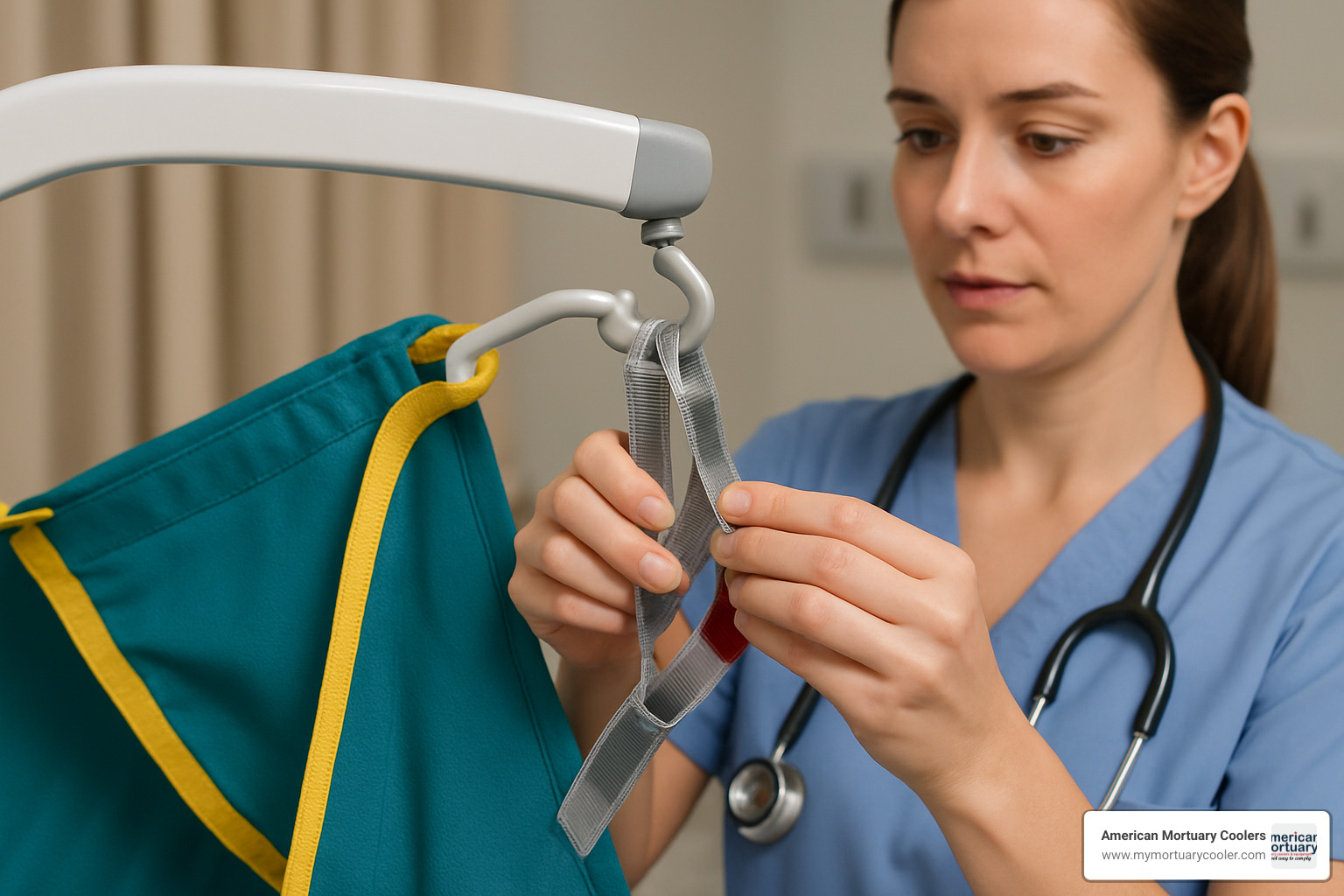
Sling attachment is critical. Take your time here because a poorly attached sling can cause discomfort or injury. Position the sling under your patient using proper body mechanics. When you attach the sling loops to the spreader bar, double-check every connection.
Lifting should be smooth and gradual. Don't jerk the controls or rush the process. Watch your patient's face - they'll tell you if something doesn't feel right. Raise them just high enough to clear the surface they're leaving.
Moving the patient requires patience and communication. Open up those caster wheels and move slowly. Position carefully over the receiving surface before you start lowering.
Lowering is just as important as lifting. Go slowly and make sure your patient is fully supported by their destination before you remove the sling.
Choosing Slings & Accessories
The right sling makes all the difference between a comfortable transfer and a miserable experience. Full-body slings provide complete support for patients who can't help with positioning, while U-shaped slings work better for people who have some trunk control.
For toileting transfers, you'll want a commode sling with the appropriate cut-out design. Mesh slings dry quickly after bathing.
Sizing matters more than you might think. Small slings fit chest measurements of 24-34 inches, medium handles 34-44 inches, large covers 44-48 inches, and extra large accommodates 48-55 inches.
Digital scales built into the lift system can be incredibly helpful for tracking patient progress or medication dosing that depends on weight.
Maintenance, Inspection & Troubleshooting
A well-maintained medical lift will serve you faithfully for years. Neglected equipment has a way of failing at the worst possible moments.
Every day before use, give your lift a quick once-over. Look for obvious damage, check that the battery shows adequate charge, and make sure the wheels roll smoothly. Test the safety features like emergency stops and manual lowering.
Weekly deep cleaning keeps your equipment hygienic and helps you spot problems early. Pay attention to the moving parts and give them appropriate lubrication. Inspect your slings carefully for any signs of wear, especially around the attachment points.
Monthly professional maintenance should include checking hydraulic systems, testing battery performance thoroughly, and calibrating any built-in scales.
Annual comprehensive inspections are non-negotiable for patient safety. Professional service and certification ensure your equipment meets all current safety standards.
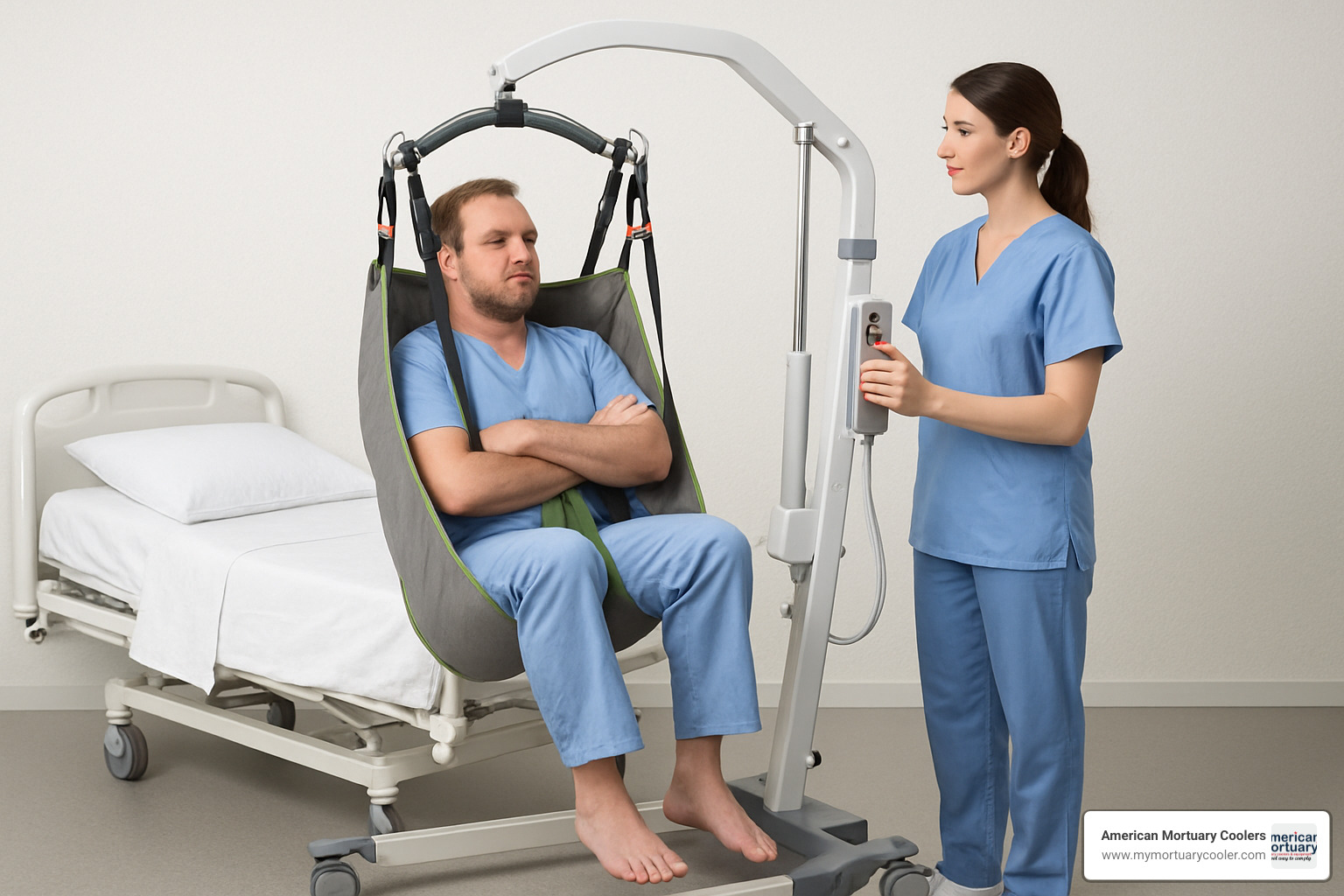
At American Mortuary Coolers, we've seen how proper maintenance extends equipment life dramatically. The same principles that keep mortuary equipment running smoothly apply to medical lifts - consistent care prevents expensive repairs and ensures reliable operation when you need it most.
Ownership Essentials: Training, Insurance & Emerging Technology in Medical Lifts
Getting a medical lift is just the beginning - the real success comes from proper training, understanding your funding options, and keeping up with the latest technology.
Training & Certification Requirements for Safe Handling
You wouldn't hand someone the keys to a forklift without training, and medical lifts deserve the same respect. OSHA guidelines aren't just paperwork - they're based on real incidents that could have been prevented with proper education.
Good training starts with the basics. New operators need hands-on time learning equipment operation and safety features, plus understanding how to assess patients and select the right sling. Emergency procedures and troubleshooting skills matter when things don't go as planned.
Competency testing keeps everyone honest. Written tests are fine, but nothing beats watching someone actually operate the lift with a real patient. Emergency response scenarios might feel awkward to practice, but they build confidence when seconds count.
The learning never stops. Monthly safety meetings should include lift operation topics, and annual recertification catches bad habits before they become dangerous ones.
Facilities with comprehensive training programs see dramatically fewer lift-related incidents and much higher staff confidence levels.
Insurance, Medicare & Funding Options
Medicare Part B covers patient lifts when they're medically necessary, paying 80% of the approved amount after you meet your Part B deductible.
Getting Medicare coverage requires some paperwork. You'll need a physician prescription that clearly states medical necessity, plus documentation of mobility limitations. The equipment must be for home use, and your supplier needs to be Medicare-enrolled.
Medicare has its limits though. They cover basic lift functionality but won't pay for premium features or fancy accessories. Some situations require prior authorization, and there are annual caps on durable medical equipment benefits.
Don't give up if Medicare doesn't work out. Private insurance plans often have better DME benefits, and Veterans Administration coverage helps eligible veterans. State Medicaid programs sometimes offer expanded benefits, and charitable organizations plus equipment loan programs can fill gaps.
Innovations Changing the Medical Lift Market
The medical lift industry is getting exciting upgrades. Scientific research on lift innovation shows some impressive developments coming to market.
Smart technology is the biggest game-changer. Remote control operation gives caregivers better positioning control, while load-cell sensors provide real-time weight monitoring. IoT connectivity enables performance tracking, and cloud-based analytics help optimize usage patterns.
Safety features are getting smarter too. Advanced fall prevention sensors, automated emergency stop systems, and voice-guided operation instructions reduce human error. Biometric access controls ensure only trained operators use the equipment.
The user experience keeps improving. Intuitive touchscreen interfaces replace confusing button layouts, and customizable operation profiles adapt to different patient needs. Patient comfort monitoring and noise reduction technology make transfers more pleasant for everyone involved.
Frequently Asked Questions about Medical Lifts
When you're considering a medical lift, certain questions come up again and again. Having worked with healthcare facilities and families across the country, I've heard these concerns countless times.
How do I know which sling size to order?
Getting the right sling size is straightforward once you know what to measure. The key is the patient's chest measurement at the widest point - usually right across the chest and shoulder blades.
Small slings fit chest measurements of 24-34 inches, medium covers 34-44 inches, large handles 44-48 inches, and extra large accommodates 48-55 inches.
But there's more to consider than just measurements. Think about the patient's body shape and any special needs. Someone who needs toileting assistance will benefit from a commode sling with a cut-out design. If bathing is involved, a quick-dry mesh material makes more sense than standard fabric.
When you're unsure, don't guess - reach out to your equipment supplier. Most reputable companies will walk you through the selection process and even provide sizing samples if needed.
Can one caregiver operate a medical lift alone?
This is probably the most common concern I hear, especially from family caregivers who feel nervous about handling transfers solo. The good news is that medical lifts are specifically engineered for single-person operation when used correctly.
The success of one-person operation depends on several factors. Patient cooperation makes a huge difference - someone who can follow simple instructions and remain calm during transfers is much easier to handle alone. Your own experience level matters too.
Electric lifts are particularly well-suited for solo operation because they eliminate the physical pumping required with manual hydraulic systems. You can focus entirely on patient positioning and safety rather than operating a hand lever.
Consider the complexity of your typical transfers as well. Moving someone from bed to wheelchair in a spacious room is different from navigating a tight bathroom for toileting assistance.
Will Medicare cover a ceiling-mounted medical lift at home?
Medicare coverage for ceiling lifts is possible, but it comes with specific requirements. Medicare Part B treats ceiling lifts as durable medical equipment (DME), which means they'll cover 80% of the approved amount after you meet your deductible.
The catch is proving medical necessity through proper documentation. You'll need a physician's prescription that clearly states why a ceiling lift is required rather than a portable floor model.
Medicare typically covers the basic lift mechanism and motor, standard track installation for essential room coverage, fundamental safety features, and a basic sling or two.
What Medicare generally won't cover includes premium features like remote controls, cosmetic modifications, installation labor costs in many cases, multi-room track systems beyond medical necessity, and specialty accessories beyond the basics.
Before getting your hopes up, call Medicare directly or speak with a knowledgeable DME supplier about your specific situation.
Conclusion
Choosing the right medical lift can feel overwhelming with so many options available, but understanding your specific needs makes the decision much clearer. Whether you're looking at a basic manual hydraulic model for occasional home use or a sophisticated ceiling-mounted system for a busy healthcare facility, the key is matching the equipment to your actual requirements.
The journey from a $459 manual lift to a premium ceiling system supporting 660+ pounds isn't just about budget - it's about finding the sweet spot between functionality, safety, and long-term value. Manual lifts work beautifully when caregivers have the physical strength and transfers happen less frequently. Electric models shine when you need multiple daily transfers or when caregiver strength is limited.
Space considerations often drive the final decision. Ceiling lifts excel in tight quarters where maneuvering a floor lift becomes challenging. Portable models offer flexibility for families who travel or need equipment in multiple locations.
At American Mortuary Coolers, our years of manufacturing custom equipment have taught us that durability and proper specification beat flashy features every time. The same principles that guide our mortuary lift systems apply to medical lifts - build it right, specify it correctly, and it will serve faithfully for years.
Training and maintenance can't be afterthoughts. The best medical lift in the world becomes dangerous without proper operator training and regular upkeep. Medicare coverage helps with costs, but understanding the requirements upfront prevents surprises later.
The real payoff comes in daily use - fewer caregiver injuries, maintained patient dignity, and the peace of mind that comes with safe, reliable transfers. Whether you're caring for a loved one at home or managing a healthcare facility, investing in quality lift equipment improves everyone's quality of life.
Take your time evaluating options, ask plenty of questions, and remember that the right medical lift is an investment in safety and independence that pays dividends every single day it's used.