



Introduction
Selecting the right multi-body mortuary cooler is one of the most critical decisions for funeral homes, hospitals, medical examiners, and morgue facilities. Unlike single-body units, multi-body mortuary coolers must handle greater capacity demands while maintaining precise temperature control, ensuring regulatory compliance, and providing reliable performance 24/7. The wrong choice can lead to equipment failures, temperature fluctuations, compliance violations, and significant operational disruptions.
Whether you're expanding your facility, replacing aging equipment, or establishing a new morgue, understanding the essential features of multi-body mortuary coolers will help you make an informed investment that serves your facility for decades. This comprehensive guide examines the key specifications, construction standards, safety features, and performance criteria that separate superior multi-body refrigeration systems from inadequate alternatives.
At American Mortuary Coolers, we've helped hundreds of facilities nationwide select and install the perfect morgue cooling solutions. Our experience has shown that facilities who prioritize these key features experience fewer service calls, lower operational costs, and greater peace of mind knowing their equipment will perform when it matters most.
1. Precise Temperature Control and Monitoring Systems
Why Temperature Precision Matters
The primary function of any mortuary cooler is maintaining consistent temperatures between 34-38°F to properly preserve deceased individuals and prevent decomposition. Multi-body units face additional challenges because frequent door openings, varying body temperatures, and thermal load differences can cause temperature fluctuations that compromise preservation quality.
Essential Temperature Control Features
Digital Temperature Controllers: Modern multi-body morgue coolers should feature microprocessor-based digital controls that maintain temperatures within ±1°F accuracy. Analog controls lack the precision necessary for reliable multi-body storage and should be avoided in professional applications.
Individual Compartment Monitoring: The most advanced multi-body systems offer individual temperature monitoring for each storage compartment, allowing operators to identify localized issues before they affect other bodies. This feature is particularly valuable in larger 6-body, 8-body, or 12-body configurations.
Real-Time Temperature Displays: External digital displays provide at-a-glance confirmation that refrigeration systems are operating correctly without opening doors. Look for bright LED displays visible from across the room.
Continuous Temperature Logging: Built-in data logging systems record temperature readings every few minutes, creating permanent records for compliance documentation and troubleshooting. Many modern units offer USB download capability or network connectivity for seamless record-keeping.
Multi-Stage Alarm Systems: Comprehensive alarm systems are non-negotiable for multi-body units. Essential alarms include:
- High-temperature alerts (when temperature exceeds safe thresholds)
- Low-temperature warnings (to prevent freezing)
- Power failure notifications
- Door ajar alarms
- Compressor failure alerts
- Visual and audible alarm indicators
Advanced systems can send alerts via phone, email, or building management system integration, ensuring staff respond immediately to any temperature excursions even during overnight hours.
Temperature Recovery Time
When evaluating multi-body mortuary coolers, ask manufacturers about temperature recovery time—how quickly the unit returns to proper temperature after door openings. Superior units should recover within 15-20 minutes even after extended door access. Slow recovery times indicate undersized compressors or inadequate insulation.
2. Commercial-Grade Refrigeration Components
Compressor Quality and Capacity
The refrigeration system is the heart of any morgue cooler, and multi-body units require substantial cooling capacity to maintain proper temperatures under varying thermal loads.
Compressor Type: Look for heavy-duty commercial-grade compressors specifically rated for continuous operation. Household-grade compressors found in cheaper units will fail prematurely under the demanding conditions of multi-body mortuary applications.
Adequate Sizing: Compressors must be properly sized for the unit's capacity. A 6-body cooler requires significantly more refrigeration capacity than simply scaling up a 2-body unit. Undersized compressors run continuously, leading to premature failure, higher energy costs, and inadequate cooling during peak demand periods.
Brand Reputation: Specify units with compressors from established manufacturers like Tecumseh, Copeland, or Danfoss. These brands offer proven reliability and widespread parts availability for long-term serviceability.
Redundancy Options: For critical applications or high-volume facilities, consider dual-compressor systems that provide backup refrigeration if one compressor fails. This redundancy prevents catastrophic losses during equipment malfunctions.
Evaporator and Condenser Design
Evaporator Coils: Large-surface-area evaporator coils maximize heat transfer efficiency and ensure even cooling throughout the storage compartment. Coils should be strategically positioned to create optimal air circulation patterns.
Forced-Air Circulation: Multi-body units should incorporate commercial-grade fans that circulate cooled air throughout all storage areas, eliminating hot spots and ensuring uniform temperature distribution. Gravity cooling alone is insufficient for multi-body applications.
Condenser Location: External condensers (remote systems) are preferable in many installations as they remove heat generation from the morgue space, reducing HVAC loads. Self-contained units with integral condensers are more compact but may create ventilation challenges in smaller rooms.
Easy-Clean Condensers: Condenser coils accumulate dust and debris that reduce efficiency. Look for accessible condenser locations with removable panels for routine cleaning and maintenance.
Refrigerant Type
Modern mortuary coolers should use environmentally responsible refrigerants that comply with EPA regulations. R-404A and R-134a are common choices, though newer units may use R-449A or other low-GWP (Global Warming Potential) alternatives. Ensure the refrigerant type is clearly specified and service technicians in your area are qualified to work with that refrigerant.
3. Medical-Grade Stainless Steel Construction
Why Stainless Steel Is Non-Negotiable
Morgue environments demand materials that withstand rigorous cleaning protocols, resist corrosion from chemical cleaners and biological fluids, and maintain sanitary conditions. Medical-grade stainless steel is the only acceptable material for professional multi-body mortuary coolers.
Stainless Steel Specifications
Grade 304 vs. 316 Stainless Steel: Both are acceptable for mortuary applications, though 316 stainless offers superior corrosion resistance in high-moisture environments or facilities near coastal areas. Grade 304 is industry-standard for most inland applications.
Interior Surfaces: All interior surfaces—walls, ceilings, floors, and tray slides—should be constructed from stainless steel. Painted surfaces, galvanized steel, or aluminum are inappropriate as they corrode, harbor bacteria, and fail to withstand chemical cleaning agents.
Exterior Finish: Exterior cabinets should also feature stainless steel construction, though some facilities accept high-quality powder-coated steel exteriors for budget considerations. However, stainless exteriors offer the longest service life and easiest maintenance.
Finish Quality: Look for #4 brushed stainless finish or better. This finish conceals minor scratches and provides a professional appearance that's easy to clean. Mirror-polished finishes show every fingerprint and require excessive maintenance.
Construction Quality Indicators
Welded Seams: Superior multi-body coolers feature continuously welded seams rather than mechanical fasteners. Welded construction eliminates crevices where bacteria can accumulate and creates a stronger, more durable cabinet.
Seamless Corners: Radius corners without seams or joints prevent fluid accumulation and simplify cleaning. Right-angle corners with visible seams are difficult to sanitize properly.
Reinforced Framework: Heavy-gauge stainless steel (16-gauge or thicker for structural components) ensures the unit withstands decades of use without warping or degradation.
Coved Flooring: Floors should feature coved (curved) transitions to walls, eliminating square corners where fluids can collect. This design is standard in food service and healthcare applications for good reason.
4. High-Performance Insulation Systems
The Critical Role of Insulation
Proper insulation is essential for energy efficiency, temperature stability, and condensation prevention. Multi-body units with inadequate insulation struggle to maintain proper temperatures, waste energy, and develop condensation issues that promote mold growth and corrosion.
Insulation Specifications
Insulation Type: High-density polyurethane foam insulation (CFC-free) is the gold standard for mortuary coolers. This closed-cell foam provides excellent thermal resistance (R-value), moisture resistance, and structural support to cabinet walls.
Insulation Thickness: Multi-body units should feature minimum 2-inch thick insulation in walls, with 3-inch insulation preferred for superior performance. Door insulation should be equally robust.
Seamless Application: Insulation should be foamed-in-place during manufacturing, creating a continuous barrier without gaps, seams, or thermal bridges that compromise performance.
R-Value Rating: Look for insulation systems with R-values of R-25 or higher for walls and R-30+ for doors. Higher R-values mean better temperature stability and lower operating costs.
Condensation Prevention
Quality insulation systems prevent condensation formation on exterior surfaces—a common problem with poorly insulated units. External condensation can damage flooring, create slip hazards, and indicate energy waste. Ask manufacturers specifically about their condensation prevention measures and request performance guarantees.
5. Heavy-Duty Door Systems with Superior Sealing
Door Configuration Options
Multi-body mortuary coolers are available in several door configurations, each with distinct advantages:
Individual Compartment Doors: Each body position has its own door, minimizing temperature loss when accessing one position and providing security for individual cases. This configuration is ideal for medical examiner offices handling forensic cases requiring chain-of-custody documentation.
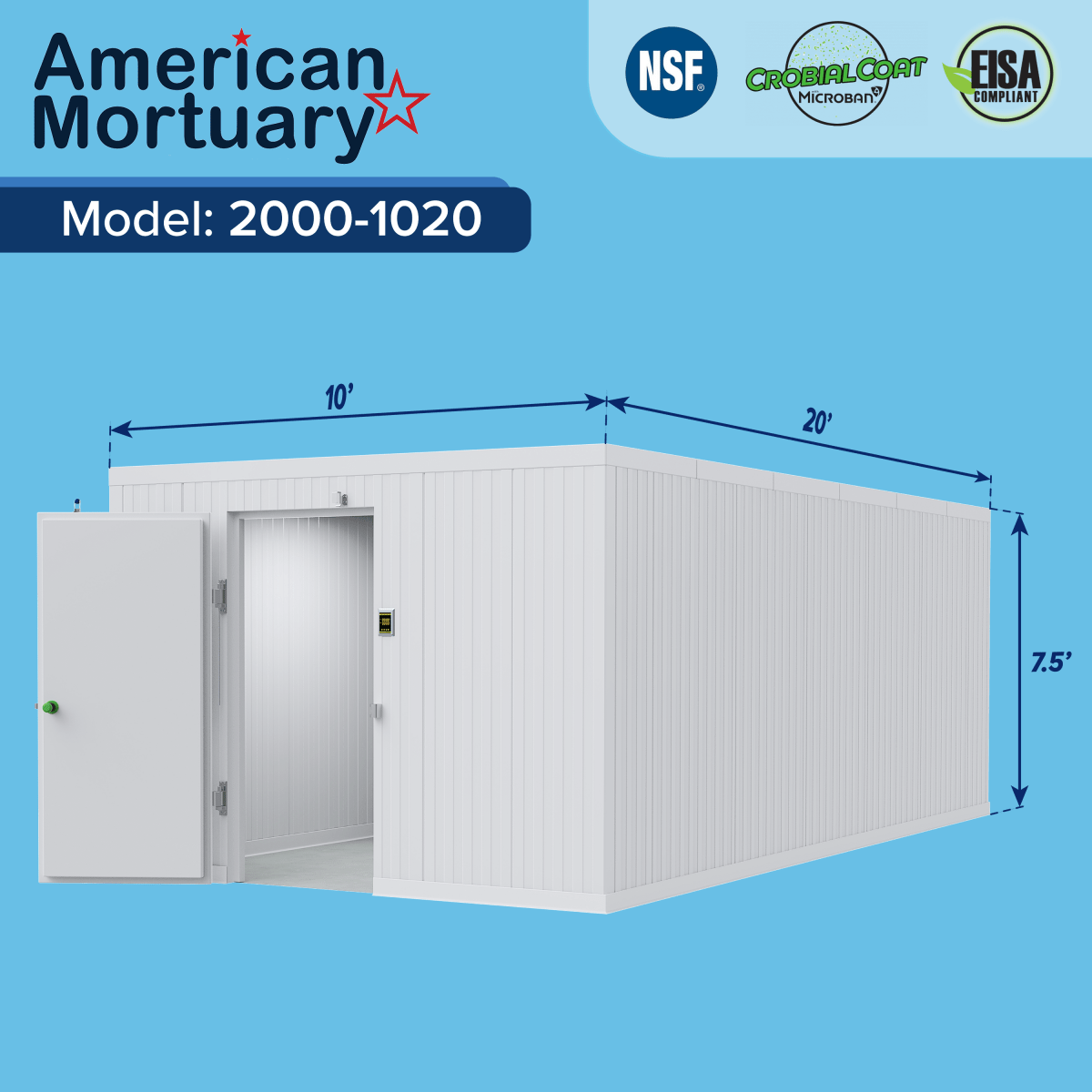
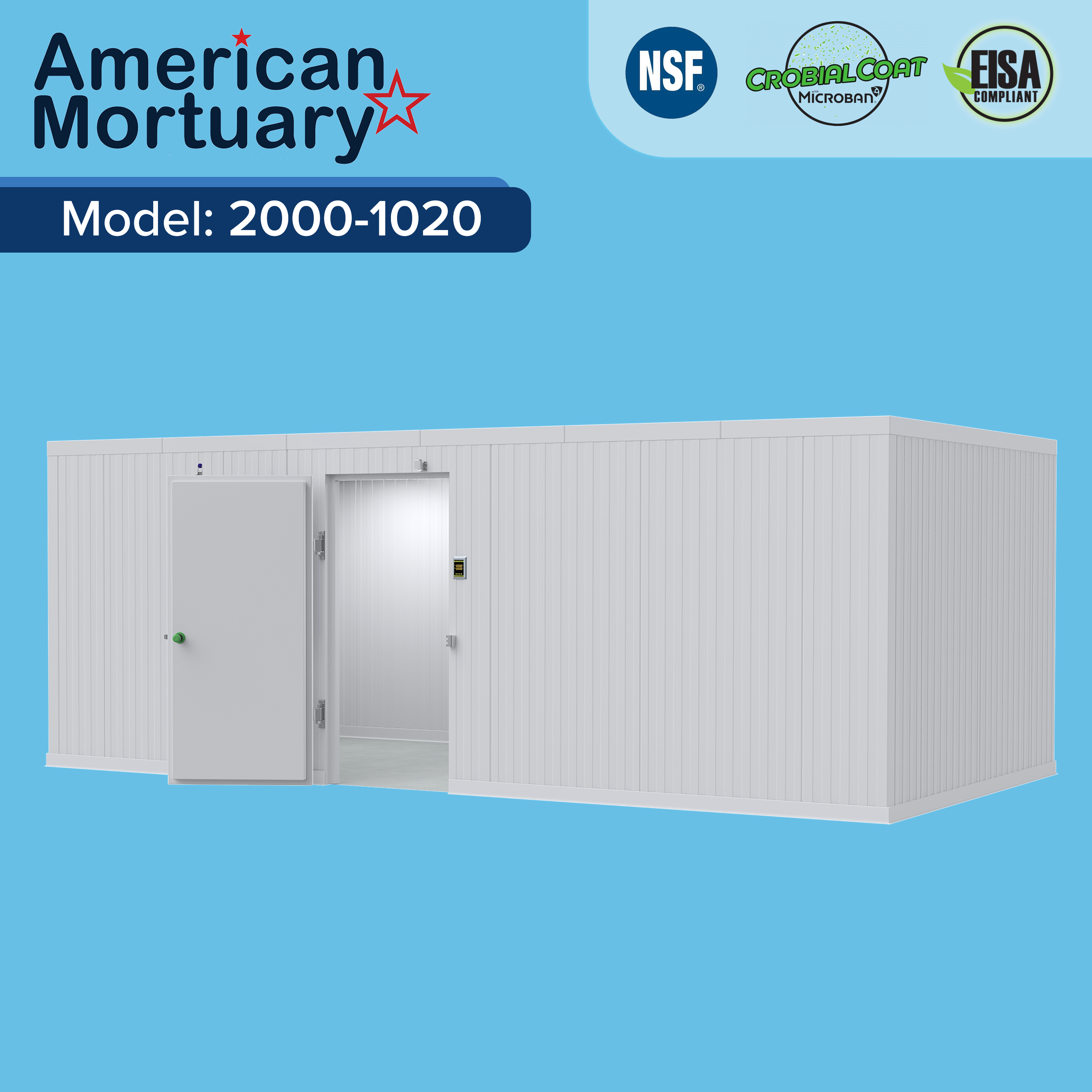
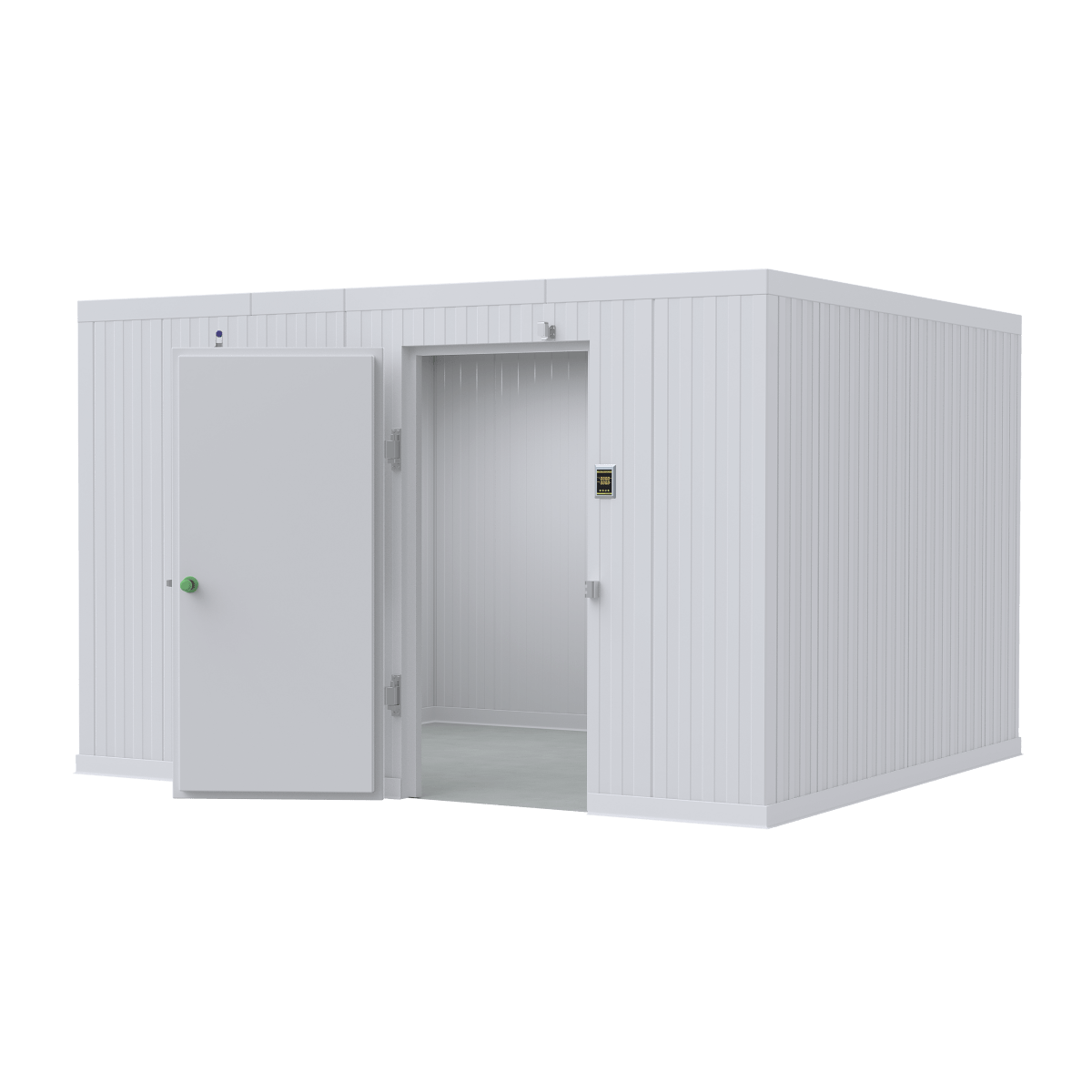
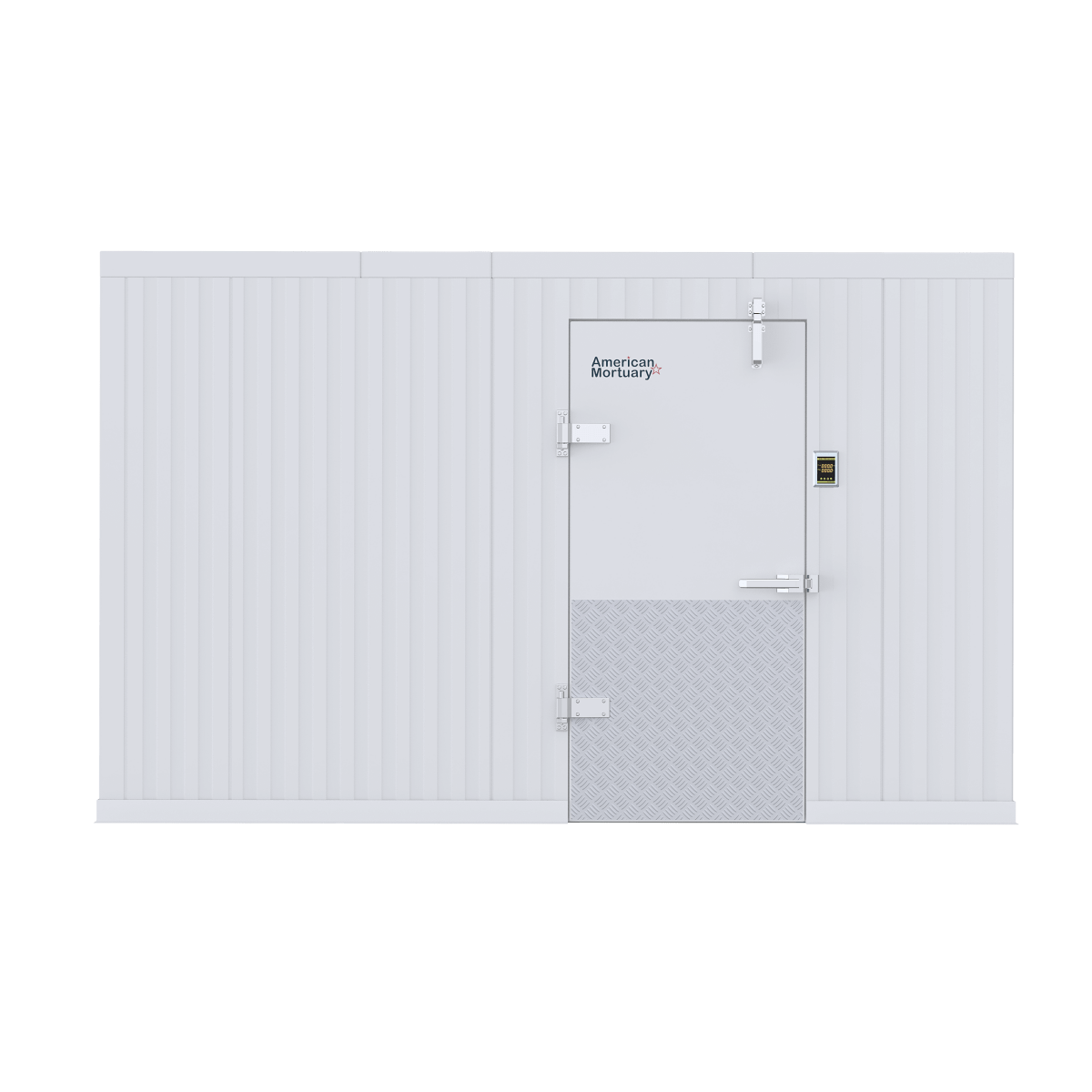
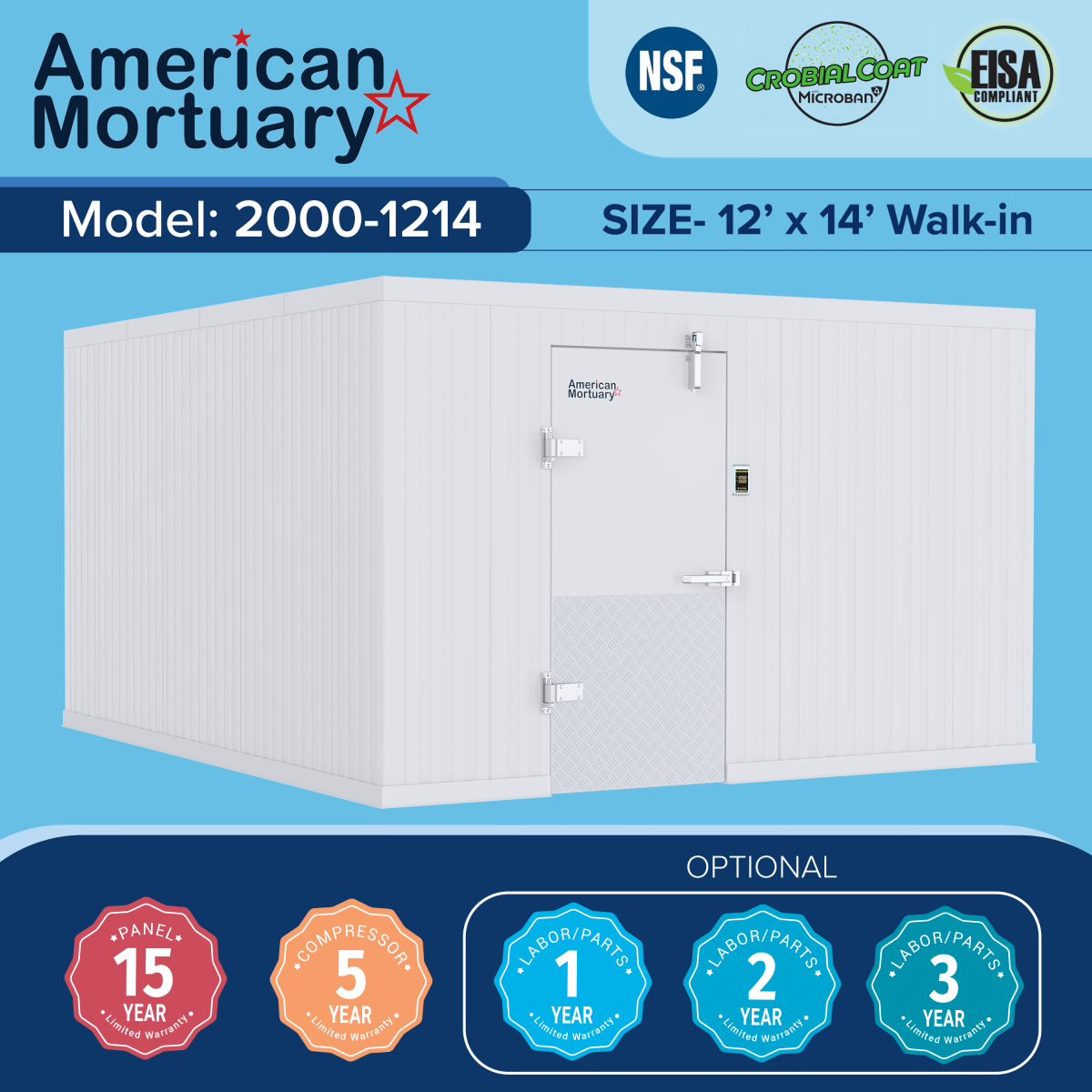
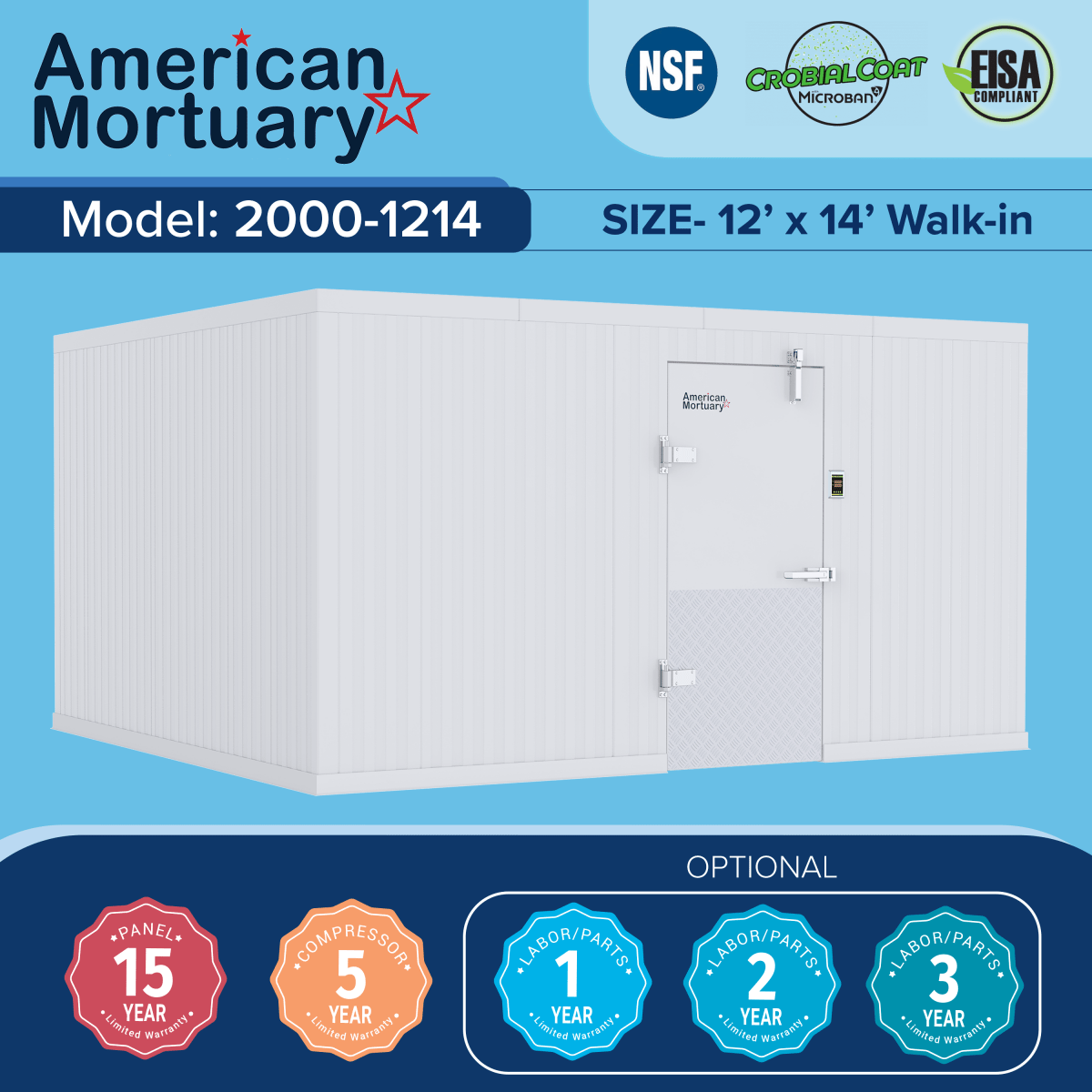
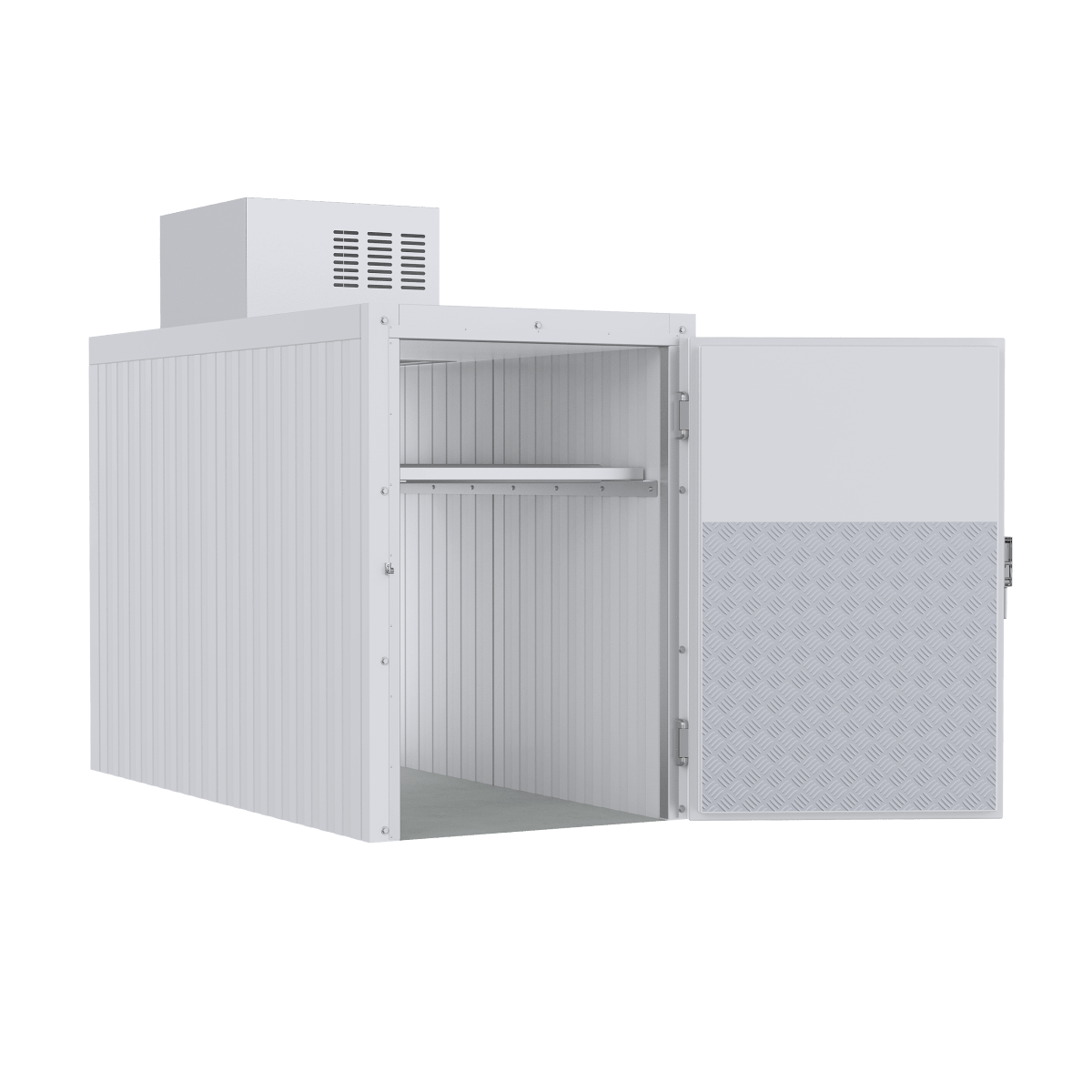
Single Large Door (Walk-In Style): One large insulated door provides access to all body positions simultaneously. This design facilitates easier body placement and removal, especially for bariatric cases or when handling multiple bodies. Walk-in configurations are popular in high-volume funeral homes and hospital morgues.
Pass-Through Design: Double-door configuration with doors on opposite sides of the unit allows bodies to be received on one side and released on the other, creating efficient workflow in facilities with separate receiving and releasing areas.
Combination Configurations: Some multi-body units offer a combination of individual compartments and larger access sections, providing flexibility for different case types.
Critical Door Features
Heavy-Duty Hinges: Stainless steel hinges rated for thousands of open/close cycles ensure long-term reliability. Look for self-closing hinges that prevent doors from being left ajar accidentally.
Magnetic Gasket Seals: High-quality magnetic door gaskets create airtight seals that prevent temperature loss and maintain precise cooling. Gaskets should be easily replaceable as they wear over time.
Ergonomic Handles: Lever-style or recessed handles that operate easily even when wearing gloves are essential. Avoid units with small knobs or handles that require excessive force to operate.
Door Locks: Keyed locks provide security for forensic cases, controlled substances stored in body cavities, or facilities requiring restricted access. Some facilities require individual locks for each compartment.
Interior Release Mechanisms: Safety regulations may require interior release mechanisms that allow anyone accidentally trapped inside to exit. This is particularly important for walk-in style multi-body units.
Observation Windows: Optional observation windows (heated to prevent condensation) allow visual inspection without opening doors, though privacy considerations may make these inappropriate for some facilities.
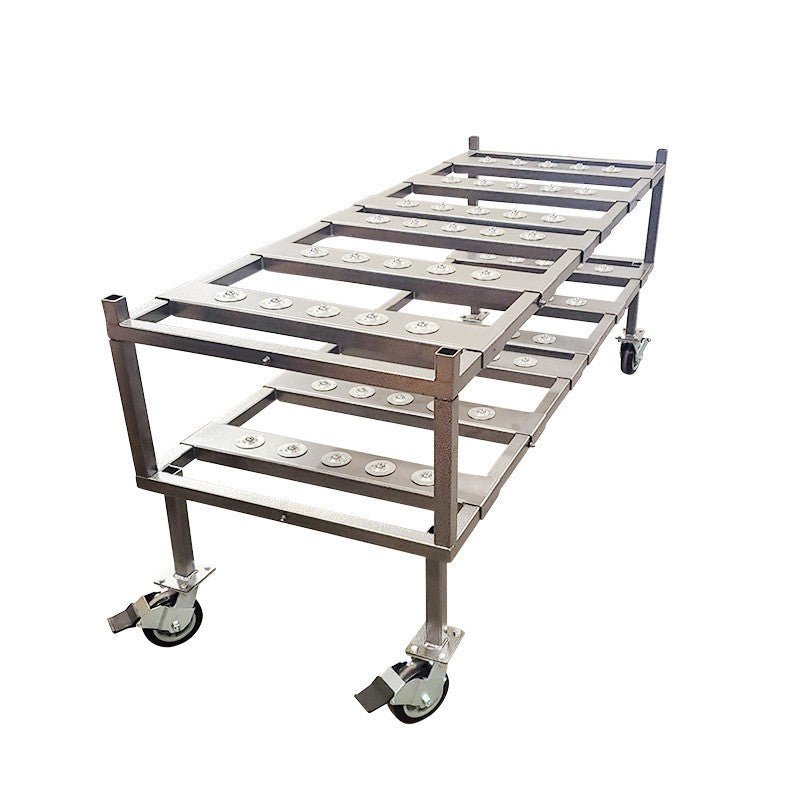
6. Body Tray and Racking Systems
Tray Design and Construction
Stainless Steel Trays: Body trays should be constructed from heavy-gauge stainless steel (14-gauge minimum) with reinforced edges to support weights up to 350-500 pounds depending on application.
Perforated vs. Solid Trays: Perforated trays allow air circulation around bodies for optimal cooling, though solid trays may be preferred when fluid containment is priority. Some facilities use disposable plastic liners on solid trays.
Tray Dimensions: Standard trays accommodate bodies up to 6'6" in length, but specify longer trays if your facility regularly handles taller individuals. Width should be adequate (typically 28-32 inches) for comfort during preparation and dressing.
Raised Edges: Trays with raised perimeter edges (minimum 1-inch) prevent bodies from sliding off during positioning or facility vibration.
Racking and Slide Systems
Heavy-Duty Slides: Ball-bearing roller systems or Teflon slide mechanisms allow smooth, quiet tray operation with minimal effort even when fully loaded. Inferior slide mechanisms bind, require excessive force, and fail prematurely.
Full-Extension Capability: Trays should pull out completely for full access during body placement, examination, or preparation. Partial-extension systems create awkward working positions and increase injury risk.
Positive Stops: Tray slides should include positive stops that prevent trays from being accidentally pulled completely out while still allowing intentional removal for deep cleaning.
Adjustable Height Options: Some multi-body systems offer adjustable tray heights to accommodate different staff working heights or special needs. This feature enhances ergonomics and reduces back injuries.
Bariatric Considerations: Facilities serving populations with higher obesity rates should specify reinforced trays and slide systems rated for 750-1,000 pounds. Standard systems are inadequate for bariatric cases.
7. Energy Efficiency Features
Why Energy Efficiency Matters
Multi-body mortuary coolers operate 24/7/365, making energy consumption a significant operational expense. An energy-efficient unit can save thousands of dollars annually while reducing environmental impact.
Key Energy-Saving Features
High-Efficiency Compressors: ENERGY STAR rated or equivalent compressors consume substantially less electricity while providing adequate cooling capacity. Variable-speed compressors that adjust to cooling demand offer even greater savings.
LED Interior Lighting: LED lights consume 75% less energy than incandescent bulbs, generate minimal heat, and last 25-50 times longer, virtually eliminating bulb replacement costs.
Efficient Fan Motors: ECM (electronically commutated motor) fans use significantly less energy than traditional motors while providing superior air circulation.
Superior Insulation: As discussed earlier, thick high-R-value insulation dramatically reduces compressor runtime and energy consumption.
Night Setback Capability: Some units allow slightly higher temperature settings during predictable low-occupancy periods, reducing energy use without compromising preservation during overnight hours when bodies aren't being accessed.
Smart Defrost Systems: Demand-defrost systems only activate when actually needed rather than on fixed schedules, eliminating unnecessary defrost cycles that waste energy and temporarily raise cabinet temperature.
Calculating Energy Costs
Request specific energy consumption data (kWh/day or kWh/month) from manufacturers. Multiply this by your local electric rate to calculate annual operating costs. When comparing units, even small differences in daily energy consumption compound to substantial cost differences over a 15-20 year equipment lifespan.
For example, a unit consuming just 2 kWh/day more than an efficient alternative costs approximately $73 more annually (at $0.10/kWh). Over 15 years, that's $1,095 in wasted electricity—often more than enough to justify a modestly higher initial purchase price for efficient equipment.
8. Compliance with Industry Standards and Regulations
Regulatory Requirements
Multi-body mortuary coolers must comply with various federal, state, and local regulations depending on facility type and location.
NSF/ANSI Standards: While not always legally required, equipment meeting NSF/ANSI standards for food service equipment demonstrates commitment to sanitation and quality. NSF certification indicates materials are safe, cleanable, and durable.
OSHA Requirements: Occupational Safety and Health Administration standards address workplace safety including proper ventilation, chemical storage, and equipment safety features. Ensure equipment supports OSHA compliance for your facility type.
State Regulations: Many states have specific requirements for morgue and mortuary refrigeration including temperature ranges, monitoring systems, and backup power capabilities. Consult your state funeral board or health department for applicable regulations.
Local Health Department Standards: Local jurisdictions may impose additional requirements for morgue facilities. Involve your local health department early in equipment selection to ensure compliance.
Building and Electrical Codes: Ensure equipment meets local building codes and electrical requirements. Specify appropriate voltage and phase for your facility's electrical system.
Compliance Documentation
Reputable manufacturers provide comprehensive documentation including:
- Equipment specifications and performance data
- Material certifications (stainless steel grade, refrigerant type)
- Electrical and plumbing requirements
- Installation and operation manuals
- Maintenance schedules and procedures
- Warranty information
Maintain this documentation for inspections, accreditation surveys, and future reference.
9. Reliability and Service Support
Manufacturer Reputation and Experience
Industry Experience: Choose manufacturers with proven track records in mortuary refrigeration. Companies specializing in this niche understand the unique requirements and provide purpose-built solutions rather than adapting equipment designed for other applications.
Customer References: Request references from facilities similar to yours. Contact these references to learn about equipment performance, manufacturer responsiveness, and long-term satisfaction.
Installation Track Record: Ask about the number of multi-body units installed and how long the manufacturer has been producing this specific model. New designs may have undiscovered issues, while proven designs offer confidence.
Warranty Coverage
Comprehensive Warranties: Look for warranties covering:
- Compressor: 3-5 years minimum
- Other refrigeration components: 3 years minimum
- Cabinet construction: 1-3 years
- Labor: 1 year minimum
Extended Warranty Options: Consider purchasing extended warranties for critical equipment, especially if your facility lacks in-house refrigeration technicians.
Warranty Terms: Read warranty terms carefully. Some warranties require professional installation, routine maintenance documentation, or other conditions. Understand what voids the warranty.
Service and Support
National Service Network: For nationwide manufacturers, confirm they have certified service technicians in your area. Local service availability is critical for rapid response to equipment failures.
24/7 Emergency Support: Multi-body coolers are mission-critical equipment. Manufacturers should provide 24/7 emergency phone support and expedited service response for cooling system failures.
Parts Availability: Confirm the manufacturer maintains adequate parts inventory and can ship critical components (compressors, control boards, etc.) overnight. Proprietary components with limited availability create service nightmares.
Technical Support: Access to knowledgeable technical support staff who can troubleshoot issues remotely and guide your maintenance team through minor repairs reduces service call expenses.
Preventive Maintenance Programs: Some manufacturers offer preventive maintenance agreements that include scheduled inspections, cleaning, and service, potentially extending equipment life and preventing unexpected failures.
10. Capacity Planning and Configuration Options
Determining Required Capacity
Selecting appropriate multi-body cooler capacity requires careful analysis of your facility's needs:
Average Daily Volume: Calculate your average number of cases requiring refrigerated storage simultaneously. For funeral homes, this typically ranges from 2-6 bodies. Medical examiners and hospital morgues may have higher averages.
Peak Demand: Consider maximum capacity needs during peak periods (flu season, heat waves, mass casualty incidents). Specify capacity that accommodates typical peak demand plus 20-30% buffer.
Future Growth: If your facility is growing, select capacity that accommodates projected volume 3-5 years forward. Expanding refrigeration capacity later is significantly more expensive than installing adequate capacity initially.
Case Mix Considerations: Facilities handling a significant percentage of bariatric cases may need fewer, larger capacity positions rather than more standard positions.
Turnaround Time: Facilities with quick turnaround (bodies released within 24-48 hours) need less capacity than those with longer average storage duration.
Configuration Flexibility
Modular Options: Some manufacturers offer modular systems that can be expanded by adding additional sections. This approach provides flexibility for growing facilities.
Mixed Configuration: Consider units with both standard and bariatric positions, or combinations of individual compartments and walk-in access sections.
Convertible Positions: Adjustable tray systems that can accommodate either one bariatric case or two standard cases provide maximum flexibility.
Vertical vs. Horizontal Capacity: Multi-body units are available in side-by-side configurations, stacked configurations (bodies stored vertically in individual compartments), or combination designs. Space constraints and workflow preferences dictate the best configuration.
11. Installation Requirements and Considerations
Site Preparation
Floor Load Capacity: Multi-body coolers are extremely heavy—units can weigh 1,500-3,000+ pounds empty. Verify floor load capacity is adequate, especially for second-story installations. Add weight of capacity (6 bodies = additional 1,000+ pounds).
Doorway and Hallway Clearance: Confirm the unit will fit through all doorways, hallways, elevators, and stairwells along the delivery path. Measurements should include packaged dimensions plus clearance for moving equipment. Some large units can be partially disassembled for tight access.
Ceiling Height: Ensure adequate overhead clearance for the unit plus any top-mounted condensers or electrical connections. Allow extra height for service access.
Electrical Requirements: Confirm your facility has appropriate electrical service (voltage, amperage, phase) at the installation location. Large multi-body units may require dedicated 208V or 230V circuits with significant amperage capacity.
Ventilation Requirements: Units with integral condensers require adequate room ventilation to dissipate heat. Inadequate ventilation causes compressors to overwork and fail prematurely. Consult manufacturer specifications for CFM requirements.
Drainage: If defrost systems are included, floor drains may be required nearby for condensate disposal.
Remote Condenser Considerations: If specifying remote condensers, plan for refrigerant line runs (length limitations apply), outdoor condenser placement (protection from weather and vandalism), and electrical service at condenser location.
Professional Installation
Factory-Certified Installers: Use factory-certified installation technicians who understand proper installation procedures, refrigerant handling, and startup protocols. Improper installation voids warranties and creates operational problems.
Installation Timeline: Coordinate installation timing to minimize operational disruption. Some facilities install new equipment before removing old units to maintain continuous service.
Startup and Testing: Proper installation includes system startup, temperature verification, alarm testing, and staff training. Insist on thorough commissioning before acceptance.
12. Budget Considerations and Total Cost of Ownership
Initial Purchase Price
Multi-body mortuary coolers represent significant capital investments, typically ranging from $15,000-$50,000+ depending on capacity, features, and construction quality. Price factors include:
- Capacity: More body positions increase cost
- Construction Quality: Medical-grade stainless steel costs more than painted steel
- Refrigeration Components: High-efficiency systems cost more initially
- Features: Advanced monitoring, individual compartment controls, and redundant systems add cost
- Configuration: Custom configurations cost more than standard designs
Total Cost of Ownership
Smart buyers consider total cost of ownership over equipment lifespan (15-20 years) rather than just purchase price:
Energy Costs: Annual electricity consumption multiplied by 15-20 years of operation represents substantial expense. Energy-efficient units often pay for their higher initial cost through energy savings.
Maintenance and Repairs: Quality equipment requires less frequent repairs. Budget for annual preventive maintenance ($300-$600) and occasional component replacement.
Service Call Costs: Emergency service calls typically cost $500-$1,500 each. Reliable equipment minimizes these expenses.
Downtime Costs: Equipment failures force facilities to rent temporary refrigeration ($300-$800/week), transport bodies to other facilities, or face health department violations. Reliable equipment avoids these costs and operational headaches.
Replacement Timing: Quality equipment lasts 20+ years while budget units may require replacement in 10-12 years, essentially doubling long-term cost.
Financing Options
Most facilities finance mortuary equipment purchases through:
- Equipment Loans: Traditional loans specific to equipment purchases
- Equipment Leasing: Operating leases or capital leases with various terms
- Manufacturer Financing: Some manufacturers offer financing programs
- Lines of Credit: Using existing business credit lines
Consider tax implications, interest rates, and cash flow when selecting financing options.
Conclusion: Making the Right Multi-Body Mortuary Cooler Investment
Selecting the right multi-body mortuary cooler requires careful evaluation of numerous factors including temperature control precision, refrigeration component quality, stainless steel construction standards, insulation performance, door systems, energy efficiency, regulatory compliance, manufacturer reputation, and long-term cost of ownership.
The features highlighted in this guide represent the essential criteria that separate professional-grade multi-body morgue coolers from inadequate alternatives. While initial purchase price is certainly a consideration, prioritizing quality, reliability, and performance ensures your facility makes a wise investment that provides decades of dependable service.
Facilities that choose well-engineered multi-body mortuary coolers experience:
- Consistent temperature performance that protects case quality
- Lower energy costs from efficient operation
- Fewer service calls and reduced downtime
- Simplified compliance with regulatory requirements
- Enhanced staff safety through proper design
- Greater peace of mind knowing equipment will perform reliably
At American Mortuary Coolers, we've helped hundreds of funeral homes, hospitals, medical examiners, and morgue facilities select and install the perfect multi-body refrigeration solutions for their specific needs. Our team understands the critical nature of your work and the importance of reliable equipment that supports your mission of serving families with dignity and respect.
Ready to Discuss Your Multi-Body Mortuary Cooler Needs?
Our mortuary refrigeration specialists are ready to help you select the ideal multi-body cooler for your facility. We'll assess your capacity requirements, discuss configuration options, explain features and benefits, and provide detailed specifications and pricing.
Contact American Mortuary Coolers Today
Call Us: 888-792-9315
Available Monday-Friday, 8:00 AM - 6:00 PM EST
24/7 Emergency Service Available
Visit Our Website: MorgueCooler.com
Browse our complete line of mortuary refrigeration equipment, download product specifications, view installation photos, and request quotes online.
Request a Quote:
Complete our online quote request form and receive detailed pricing within 24 hours. Include information about your facility type, required capacity, and any special requirements.
Schedule a Consultation:
Speak directly with a mortuary refrigeration specialist who can answer your questions, discuss your specific needs, and recommend the best solution for your facility.
Why Choose American Mortuary Coolers?
✓ Made in USA Quality: American-manufactured equipment built to the highest standards
✓ 50-State Service Network: Certified technicians available nationwide for installation and service
✓ Industry Expertise: Decades of experience serving funeral homes, hospitals, and medical examiner facilities
✓ Complete Solutions: From single units to complete morgue facility design and installation
✓ Responsive Support: 24/7 emergency support and rapid response times
✓ Competitive Pricing: Fair pricing on premium equipment with flexible financing options available
Don't trust your facility's most critical equipment to chance. Contact American Mortuary Coolers at 888-792-9315 or visit MorgueCooler.com to discuss your multi-body mortuary cooler requirements with experienced professionals who understand your needs.
Related Resources
Browse Related Articles:
- Complete Guide to Hospital Morgue Equipment
- Energy Efficiency Tips for Mortuary Refrigeration
- Understanding OSHA Requirements for Morgue Facilities
- Bariatric Body Storage Solutions
- Comparing Walk-In vs. Compartment-Style Morgue Coolers
Download Free Resources:
- Multi-Body Mortuary Cooler Buyer's Guide PDF
- Equipment Specification Worksheet
- Maintenance Schedule Template
- Product Catalog - Complete Line
View Our Products:
- 4-Body Mortuary Coolers
- 6-Body Refrigeration Systems
- 8-Body Morgue Coolers
- 12-Body Hospital Systems
- Bariatric Multi-Body Units
Frequently Asked Questions
Q: What's the difference between a 6-body and 8-body mortuary cooler?
A: The primary difference is storage capacity. 6-body units accommodate up to six deceased individuals simultaneously while 8-body units accommodate eight. The additional capacity requires larger cabinets, more powerful refrigeration systems, and increased electrical requirements. Choose capacity based on your average and peak storage needs.
Q: How long does a multi-body mortuary cooler typically last?
A: Quality multi-body coolers properly maintained typically last 15-20 years or longer. The compressor is usually the first major component requiring replacement (10-15 years). Regular preventive maintenance significantly extends equipment life.
Q: What's the average monthly electricity cost for operating a multi-body cooler?
A: Energy costs vary based on unit size, efficiency, and local electric rates. Typical 6-body units consume 15-25 kWh per day ($45-$75 monthly at $0.10/kWh). High-efficiency units can reduce costs 20-30%.
Q: Do multi-body coolers require special installation or just plug-in?
A: Multi-body units require professional installation including proper electrical connections (often 208V or 230V dedicated circuits), refrigerant line connections if using remote condensers, startup procedures, and temperature verification. This isn't plug-and-play equipment.
Q: Can I add a bariatric position to a standard multi-body unit?
A: Some manufacturers offer convertible configurations where one standard position can be modified to accommodate bariatric cases. However, structural reinforcement may be required. Discuss bariatric requirements during initial specification.
Q: What maintenance does a multi-body mortuary cooler require?
A: Routine maintenance includes cleaning condenser coils quarterly, checking door gaskets for wear, verifying temperature accuracy, inspecting refrigerant lines for leaks, and annual professional service including compressor performance testing and refrigerant charge verification.
Q: Are there financing options available for multi-body mortuary coolers?
A: Yes, most facilities finance equipment purchases through equipment loans, leasing arrangements, or manufacturer financing programs. Contact us to discuss financing options that fit your budget and cash flow requirements.
Q: How quickly can a multi-body unit be delivered and installed?
A: Standard configurations typically ship within 4-6 weeks with installation completed within 1-2 days. Custom configurations may require 8-12 weeks. We'll provide specific timelines based on your requirements and our current production schedule.


